Showing posts with label #valencia. Show all posts

Friday, August 18, 2017

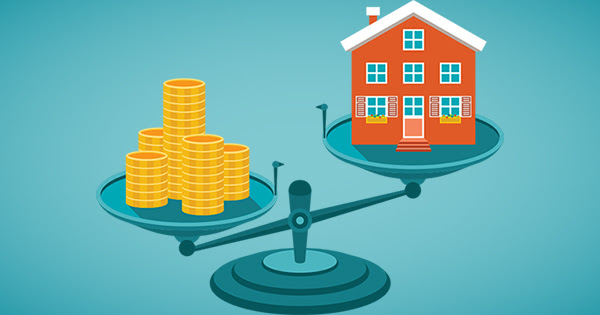
Homeowner's Net Worth Is Still Greater Than a Renter's

Every three years, the Federal Reserve conducts their Survey of Consumer Finances in which they collect data across all economic and social groups. The latest survey, which includes data from 2010-2013, reports that a homeowner’s net worth is 36 times greater than that of a renter ($194,500 vs. $5,400).
The latest survey data, covering 2014-2016 will be released later this year. In the meantime, Lawrence Yun, the National Association of Realtors’ Chief Economist estimates that the gap has widened even further, to 45 times greater ($225,000 vs. $5,000)!

Put Your Housing Cost to Work for You

As we’ve said before, simply put, home ownership is a form of ‘forced savings.’ Every time you pay your mortgage, you are contributing to your net worth. Every time you pay your rent, you are contributing to your landlord’s net worth.
The latest National Housing Pulse Survey from NAR reveals that 84% of consumers believe that purchasing a home is a good financial decision. William E. Brown comments :
“Despite the growing concern over affordable housing, this survey makes it clear that a strong majority still believe in home ownership and aspire to own a home of their own. Building equity, wanting a stable and safe environment, and having the freedom to choose their neighborhood remain the top reasons to own a home. 

Bottom Line

If you are interested in finding out if you could put your housing cost to work for you by purchasing a home, call us today so we can guide you through the process. 661-702-4767

Thursday, November 3, 2016

**Top 10 Reasons To List Your House During The Holidays**

 .


Every year I hear from sellers that the holidays are not a good time to sell a home.  The unbelievable part is, it's one of the best times of years to make a move! 

Here are the top 10 reasons to make a move during the holidays:

  1. People who are spending their time looking at property during the holidays are MOTIVATED serious buyers and are more ready to make a move!
  2. Many sellers are going to wait until after the holidays to list their homes which means less competition for your home.
  3. Houses "show better" when tastefully decorated for the holidays with the pretty lights and festive colors associated with the season.
  4. Buyers are more emotional during the holidays and often base their decision on the warmth and good feeling they receive when viewing a home.
  5. Buyers have more time to look for a house during the holidays because many people have time off from work to purchase a home.
  6. Many people want to buy before the end of the year for financial and tax reasons.
  7. January is traditionally the month for job transfers. Transferees can't wait until the spring to buy and these buyers need a home now.
  8. Many home buyers dedicate a larger portion of their house hunting time during the holidays to searching online, but if your home is not on the market it won't be seen.
  9. You can have a daily showing schedule, create blackout dates, and take calls around your holiday events .
  10. Many buyers want to be in a new home for Christmas. Maybe that is your goal? A bigger home, living room, dining room for the family.
Whatever the reason you want to make a move, the holidays are a perfect time to make a move, call me today, 661-702-4767, or visit www.SellingSCVHome.com for a complete market evaluation of your home.  

Tuesday, April 14, 2015

Desire For Vacation Homes Growing!

The National Association of Realtors just released their 2015 Investment and Vacation Home Buyers Survey which revealed that vacation home sales boomed in 2014 to above their most recent peak level in 2006. NAR Chief Economist Lawrence Yun said favorable conditions are driving second-home sales:
Desire to Own a Vacation Home Growing | Keeping Current Matters“Affluent households have greatly benefited from strong growth in the stock market in recent years, and the steady rise in home prices has likely given them reassurance that real estate remains an attractive long-term investment. Furthermore, last year’s impressive increase also reflects long-term growth in the numbers of baby boomers moving closer to retirement and buying second homes to convert into their primary home in a few years.”
The report shows:
  • Vacation-home sales catapulted to an estimated 1.13 million last year
  • This was the highest amount since NAR began the survey in 2003
  • Vacation sales were up 57.4% from 717,000 in 2013
  • Vacation-home sales accounted for 21 percent of all transactions in 2014, their highest market share since the survey was first conducted

Bottom Line

If you have been considering that waterfront condo in Florida, that ranch in Wyoming or that special getaway you someday will retire to, maybe now is the time to act. Prices are good and mortgage rates are at historic lows. Contact a local real estate professional to help you put your dreams to a plan.

*Large Down Payment?*

My clients always ask, "What is the best way to structure my loan."  I can't answer if they want to go interest only, balloon payment, or conventional loan, but I can help guide when they ask about a down payment.

A home buyer can put down from as little as 3 percent to as much as you want on your home purchase, if you have money in the bank, you know what you can afford monthly for your house payment without being strapped.  If you put down less than 20 percent on a home, you will be hit with Mortgage Insurance, which I have seen be as low as $150 per month up to $500 per month.  It all depends on the amount of money you put down and your credit scores.

Let me give you a scenario. I have a client who wants to buy a home for $450,000. They have $100,000 in the bank and are considering their down payment.  If they put down 5%, they will have money still in the bank to do other things with, like buy a new car or a boat cash.  Because they have good credit rating their PMI insurance would only change by about $125 per month.

Light bulb! Why would you want to take all of that money and invest into something that is going to decrease in value? My recommendation is to put 10% down on the home which is $45,000, and purchase a small income producing property for $250,000, down payment of about $50,000,  and make money on that down payment every month, plus save for your future!  Somebody else will be paying your mortgage off and soon enough you will have equity in the home to make the next home purchase.

I understand a boat, a car, a vacation are all fabulous and wonderful things to do, but why wouldn't you want to spend your money and produce more of it!  If you buy the boat, car, motorcycle on credit, (which if you can't qualify for, you should not be buying anyway!) you will have a payment, but maybe your income producing property will cover it each month and soon enough will be paid off by somebody else! In a few years or even months, you can re-finance the loan and take money out to buy the next property, and the next, and the next.  Soon enough you will be a real estate millionaire and be able to purchase whatever you want.

So bottom line, my advice is to keep as much money in your pocket to purchase income producing properties!

Tuesday, March 24, 2015

Five Spring Home Buying Strategies

The spring home-buying boom is underway, and this year buyers in some markets will face an increased amount of competition due to low housing inventory. In fact, the most recent existing-home sales report from the National Association of REALTORS® cautions that "Insufficient supply appears to be hampering prospective buyers in several areas of the country and is hiking prices."
Real estate professionals around the country are echoing the concern about the lack of available housing options. "The [housing] recovery appears slow due to a lack of inventory and a low participation rate among first-time buyers, but it’s still a competitive seller’s market," says David Yocum, a Redfin agent from Chicago.
In order to be successful in competitive markets, buyers need to be strategic in how they approach finding their dream home. Here are five tips they can incorporate into their home buying process that will prepare them with all of the information they need.

Step Away from the Computer

Despite the fact that 90 percent of home buyers start their search online, buyers should also consider getting outside and canvassing their desired neighborhoods. In a low inventory market, it's important to to be proactive and not waste time weighing options, because by that time, the property might be off the market. "In our market we hope for a burst of new inventory in the spring, but that doesn't always happen,"  "Even if that burst comes, demand will outstrip supply, so buyers have to be in a position to make a decision quickly."

Get to Know the Current Housing Market

Every housing market is different, so it's important to do research on the market and neighborhood trends. Finding a good real estate agent and keeping up with local real estate news is crucial for buyers to understand the nuances of their local housing market. "Buyers need to get up to speed quickly on market values so they know the right decision when it presents itself," says Yocum. "The more quickly buyers can educate themselves, the more successful the home search will be."

Grab Those Low Mortgage Rates—Before it's too Late!

While mortgage rates continue to hover below four percent, buyers might not be able to enjoy these low rates forever. "With all indications pointing to a rate increase from the Federal Reserve this year – perhaps as early as this summer – affordability concerns could heighten as home prices and rents both continue to exceed wages," says NAR chief economist Lawrence Yun.

Create a Dynamic Team

The fast pace of the most competitive housing markets means buyers have to be in a position to make an offer at a moment's notice. Before making an offer, buyers need to ensure they've lined up a real estate professional, a lender, a lawyer, and a home inspector. They will also want to be pre-approved for a loan and ready to complete a mortgage application as soon as they find a property.

Be Prepared for Bidding Wars

Buyers should be strategic when maneuvering a bidding war. Some agents suggest that buyer clients include an escalation clause, while others suggest they examine the deal and identify areas where they could be more flexible, in terms of contingency clauses. However, Yocum warns that "all of these [contingency clauses] have various levels of risk that not all buyers are willing to accept, and you should consult with your team before [removing] any of them."

Monday, March 9, 2015

Is the Housing Market BACK?

Is the Housing Market Back? Ask Lowes & Home Depot!

Is the Housing Market Back? Ask Lowes & Home Depot! | Keeping Current Matters
 A recent Bloomberg Business article reports that both Lowes & Home Depot experienced fourth quarter profits that beat revenue projections by the most in six quarters. So what does that mean to the housing market?

Consumer Confidence

Lowe’s Chief Executive Officer Robert Niblock said,
“Consumers are feeling better about their jobs, their wages and certainly feeling better about the value of their home, they are re-engaging in projects that they have put off.”
Sales to professional contractors have increased significantly as well, and were a driving factor in the quarter. Home Depot’s Chief Financial Officer Carol Tome calls this a “sign of health. If they are putting more items in their basket, it means they have work coming at them.”

Home Values Rising

In a quarterly consumer survey conducted by Lowe’s since 2007, the percentage of respondents who said that the value of their home is rising increased to its highest value ever, at 50%. Whether Americans are finally adding that man-cave they’ve always wanted, or renovating a master suite, an increased confidence in the value of one’s home often sparks homeowners to invest in big-ticket projects. The National Association of Realtors (NAR) reports that the median price of an existing home (for all housing types) rose year-over-year for the 35th consecutive month. Not all who are renovating are planning on staying in their home. The Demand Institute reports that “nearly half of American households plan to move at some point in the future.” For those who are planning on listing their home this spring, spending the time and money needed to update that 1950’s bathroom or kitchen can fetch higher prices in today’s market.

Bottom Line

Meeting with a local real estate professional can give you insight into the small (or big) improvements your home could use to draw the highest price and return on investment this spring.

Saturday, February 28, 2015

How Much Money Do I Need To Buy A In Santa Clarita Valley, Ca?

 The Truth About Buying a Home: You DON'T Need 20% Down | Keeping Current Matters
In a recent survey, How America Views Homeownership, it was revealed that 68% of Americans feel that now is a good time to buy a home and 95%said they want to own a home if they don’t already. Franklin Codel, head of Wells Fargo home mortgageproduction, explains:
“Although the home buying process has changed in many ways in recent years, our survey found Americans still view homeownership as an achievement to be proud of and many believe that now is a good time to buy a home.”

Confusion Creates Paralysis

However, the survey also reported that many are afraid to purchase a home because of uncertainty about “qualifying for a mortgage or navigating the home buying process”. Though 74% said they “know and understand” the financial process involved in buying a home, they also gave answers that suggest otherwise. For example:
  • 30% of respondents believe that only individuals with high incomes can obtain a mortgage
  • 64% of respondents believe they must have a “very good” credit score to buy a home
  • 44% believe that a 20% down payment is required
In actuality many of these beliefs are unfounded. Let’s look at the question of down payment: Freddie Mac, in a recent blog post addressing the issue, confirmed that there is misinformation regarding the amount necessary when determining the down payment for a home purchase:
“Did you know 40 percent of today's homebuyers using mortgage financing are making down payments that are less than 10 percent? And how about this: since 2010, the number of people putting down less than 10 percent for conventional loans has grown three fold.  So, not only are low down payment options real, they represent a significant portion of today's purchases.”
In a separate Executive Perspectives, Christina Boyle, Freddie Mac’s VP and Head of Single-Family Sales & Relationship Management explained further:
  • A person “can get a conforming, conventional mortgage with a down payment of as little as 5 percent (sometimes with as little as 3 percent coming out of their own pockets)”.
  • Qualified borrowers can further reduce the down payment coming out of their own pockets to 3 percent by lining up gifts from family, grants or loans from non-profits or public agencies.

Education is the Key

Boyle talked about the importance of educating potential buyers:
“Letting more consumers know how down payments are determined could bring more qualified borrowers off the sidelines. Depending on their credit history and other factors, many borrowers can expect to make a down payment of about 5 or 10 percent.”
Codel agreed:
“It is important for prospective homebuyers to feel empowered to ask lenders and real estate agents questions about available options, such as down payment assistance or FHA loan programs or VA loans for veterans.”

Bottom Line

If you are saving for either your first home or that perfect move-up dream house, make sure you know all your options. You CAN pay cash or you put as little as 3% down to purchase a home? ___________________________________________________________________

Friday, February 27, 2015

Interest Rates and Your Family's Wealth

How Interest Rates Impact Family Wealth | Keeping Current Matters
With interest rates right around 4%, many buyers may be on the fence as to whether to act now and purchase a new home, or wait until the end of the year. If you look at what the experts are predicting for 2015, it may make the decision for you.

Predictions for 2015 3Q:

Even an increase of half a percentage point can put a dent in your family’s net worth.

Let’s look at it this way…

The monthly payment (principal & interest only) on a $250,000 home today, with the current 4.1% interest rate would be$1,208. If we take that same home a year later, the Home Price Expectation Survey projects that prices will rise about 4% making that home cost $10,000 more at $260,000. If we take Freddie Mac’s rate projection of 4.8%, the monthly mortgage payment climbs to $1,364. Some buyers might not think that an extra $156 a month is that bad. But over the course of 30-year mortgage you have spent an additional $56,160 by waiting a year. 
Mortgage Rate Projections | Keeping Current Matters

Wednesday, February 25, 2015

List Your Santa Clarita, Ca Home Today!

Displaying

We all learned in school that when selling anything, you will get the most money if the demand for that item is high and the inventory of that item is low, remember Cabbage Patch Dolls? It is the well-known Theory of Supply & Demand. If you are thinking of selling your home,  that the time is now. Here is why…

According to research at the National Association of Realtors (NAR), buyer activity last month (January) was three times greater than it was last January. Purchasers who are ready, willing, and able to buy are in the market at great numbers. 

Buyers are ready to buy a home in Santa Clarita, Ca, but they are coming upon situation of lack of listings. Many sellers say they are waiting for the spring to list their homes! WHY?

Low Inventory=Less Competition

Many sellers find it more convenient to list their homes in Spring, however you are thinking like all the other sellers out there.  In order to get top dollar when you sell your Santa Clarita home, you must think outside of the box.   Would you rather list your home for top dollar now and have no competition or would you rather list your home in spring and have 10 of the same types of homes as yours on the market, some who may be priced lower than yours.  Think about it, same house on the market as yours listed for lower, which one would you make an offer on first? With fewer homes on the market now, your home will get more attention from buyers.  Low inventory and higher demand also drives up prices.  

By Spring we expect many more home owners to list their homes because more sellers have equity that they didn't in years past.  It is normal for inventory of homes to rise in the Spring, don't be left out of getting top dollar for your home now!


Did You Serve in The Armed Service? VA Loans Are Available To Purchase a Home in Santa Clarita, Ca!

If you have ever served in the armed services did you know you have the opportunity to receive a VA Loan to buy a home in Santa Clarita, Ca? Here are some facts about VA loans:

1.) VA loans are with zero down and very little out of your pocket!
2.) Veterans can qualify to purchase a home 2 years after a short sale or foreclosure and very favorable time frames after a BK.  
3.) VA programs can include co-borrowers who are not Veterans
4.) No minimum credit score for Veterans to qualify VA

I am here to help someone who has helped us! Please let me know how I can serve your real estate needs!


Friday, February 20, 2015

Are There Tax Benefits to Owning Your Santa Clarita Home?

Buying a home is often the biggest purchase we make in our lifetime. It can provide financial and income tax benefits, as well as emotional satisfaction. With the buying season just around the corner, potential buyers should get their finances in order and get pre-approved for a mortgage before starting their hunt.
It’s important for buyers to know the tax implications and deductions of becoming a homeowner. Did you know that buying a house can qualify you for breaks on your income tax like tax deductions for mortgage interest, property taxes, and special treatment of gains when the home is sold? You should consult with your tax advisor to get a complete understanding of how the tax laws may apply to your situation.
Let’s take a quick look at the applicable tax credits and deductions when it comes to owning a home. Keep in mind these rules only apply to a personal residence, not an investment property, vacation home, home office or rental unit.

The tax benefits of home ownership can be substantial.

Down Payment
Closing Costs
Repairs, Remodeling, Construction Costs
So, what can I deduct?
Benefits on the sale of your home
Even though your down payment is not tax deductible, using cash from your retirement plan to fund the down payment can have tax advantages. When you cash out, let the plan administrator know you intention for the distribution. If you are under age 59 ½, you can avoid the early withdrawal penalty if you are a first time home buyer and the funds are used for things like buying, building or rebuilding a first home. Keep in mind that even though you avoid the penalty you will still owe taxes on the amount of the distribution.
Closing costs are not deductible. However, be sure to carefully review the escrow settlement statement for deductible items such as property taxes and loan origination fees (points). Keep track of the closing costs associated with any refinancing as these can lower a profit when you sell the home. Points paid in a refinance can be amortized over the life of the loan and deducted on your tax return.
Any repairs, remodeling, and construction costs made to your home are also not deductible unless they are for major improvement such as a new water heater, roof replacement, additions, kitchen remodels, new windows, etc. Non-deductible items include plumbing repairs, maintenance, painting, and cleaning. Do not dispose of any of these receipts while you own the home as all of these expenses can be added to basis to reduce taxable gains when you sell.

Many homeowners find that the amount they pay in interest on their mortgage and annual property taxes is enough to incent them to itemize their deductions. Should you chose to deduct mortgage interest and property taxes, you can use Form 1098 which you will receive in January of each year, showing how much you paid in mortgage interest. If you have an impound account with the lender, the total amount paid in property taxes will be reflected on this form as well.
Another way some homeowners can qualify for additional deductions is by getting a home equity loan. Since the interest paid on a home equity loan qualifies as a deduction, the money borrowed could be used to pay off other debts where the interest is not deductible.

For many years, tax laws allowed you to avoid paying capital gain taxes when selling your home only if you rolled over the proceeds into a home that was more expensive. There were also some rules that allowed individuals over the age of 55 to avoid some taxes.
In 1997, those rules were changed. Now the IRS may allow you to exclude any gains on selling your house if you meet certain requirements. Always consult your tax advisor for more details.

The tax benefits of home ownership can be substantial. Always check with a tax expert prior to purchasing your home to make sure you’re getting the tax benefits you’re expecting. Be sure to keep good records regarding the purchase of the home and any improvements you make. Pay attention to when you make property tax and mortgage payments to ensure they fall in the year you want to take them as itemized deductions. Finally, if you have special circumstance(including a potential large gain if selling your home), always get an experts advice to make sure you get the maximum benefits allowed under tax laws.

Wednesday, February 18, 2015

Rent or Own, Either Way You Are Paying A Mortgage!

Either Way You Are Paying A Mortgage!
Either Way, You're Paying A Mortgage | Keeping Current Matters
There are some people that have not purchased a home because they are uncomfortable taking on the obligation of a mortgage. Everyone should realize that, unless you are living with your parents rent free, you are paying a mortgage - either your mortgage or your landlord’s. As a paper from the Joint Center for Housing Studies at Harvard University explains:
“Households must consume housing whether they own or rent. Not even accounting for more favorable tax treatment of owning, homeowners pay debt service to pay down their own principal while households that rent pay down the principal of a landlord plus a rate of return. That’s yet another reason owning often does—as Americans intuit—end up making more financial sense than renting.”
Also, if you purchase with a 30-year fixed rate mortgage, your ‘housing expense’ is locked in over the thirty years for the most part. If you rent, the one guarantee you will have is that your rent will increase over that same thirty year time period. As an owner, the mortgage payment is a ‘forced savings’ which will allow you to have equity in your home you can tap into later in your life. As a renter, you guarantee the landlord is the person with that equity.

Bottom Line

Whether you are looking for a primary residence for the first time or are considering a vacation home on the shore, owning might make more sense than renting since home values and interest rates are still lower than projected.

Homeownership Is The Best Way To Build Wealth

Homeownership is The Best Way To Build Wealth!

New York Times: Homeownership is Best Way To Build Wealth | Keeping Current Matters
The New York Times recently published an editorial entitled, Homeownership and Wealth Creation.” The housing market has made a strong recovery, not only in sales and prices, but also in the confidence of consumers and experts as an investment. The article explains:
“Homeownership long has been central to Americans’ ability to amass wealth; even with the substantial decline in wealth after the housing bust, the net worth of homeowners over time has significantly outpaced that of renters, who tend as a group to accumulate little if any wealth.”
Many of the points that were made in the article are on track with the research that the Federal Reserve has also conducted in their Survey of Consumer Finances. The study found that the average net worth of a homeowner ($194,500) is 36x greater than that of a renter ($5,400). One reason for this large discrepancy in net worth is the concept of ‘forced savings’ created by having a mortgage payment and was explained by the Times:
“Homeownership requires potential buyers to save for a down payment, and forces them to continue to save by paying down a portion of the mortgage principal each month.” “Even in instances where renters have excess cash, saving a substantial amount is difficult without a near-term goal, like a down payment. It is also difficult to systematically invest each month in stocks, bonds or other assets without being compelled to do so.”

Bottom Line

“As a means to building wealth, there is no practical substitute for homeownership.” If you are a renter who is considering making a purchase, sit with a local real estate professional who can explain the benefits of signing a contract to purchase over renewing your lease!

Don't Wait! Move Up To The House You Always Wanted!

Now that the housing market has stabilized, more and more homeowners are considering moving up to the home they have always dreamed of. In most areas, prices are still below those of a few years ago. Also, interest rates are still near or below 4%. However, sellers should realize that waiting to make the move while mortgage rates are increasing probably doesn’t make sense. As rates increase, the price of the house you can buy will decrease. Here is a chart detailing this point:Buyers Purchasing Power | Keeping Current Matters

Did You Wait To Buy A Home?

Did It Make Sense To Wait To Buy A Home?

There are many people out there who debated purchasing a home over the course of the last year, but ultimately did not. Whatever their reasons were for delaying, let’s look at whether the decision to wait to buy made sense.

What happened in 2014?

The 30 year fixed rate on January 2, 2014 was 4.53% as reported by Freddie Mac. Looking at the chart below, your monthly mortgage payment with principal and interest for a $250,000 home would have been $1,271.17. 

Even though interest rates have dropped below 4% and ended 2014 at 3.87%, home prices appreciated by 4.8 percent over the same time according to the Home Price Expectation Survey. So that same home appreciated by $12,000 and now costs $262,000. The most recent report by Freddie Mac reports the average 30-year fixed rate is currently 3.73%. Did It Make Sense to Wait? many may say, “See waiting a year made total sense, I’m saving $60 a month.” And they’d be right, over the course of the year they saved $729.36. But what they haven’t realized, is that as the price of the home they purchased went up by $12,000, even if they just put a down payment of 5%, they had to come up with an additional $600 at the start of the process. So really they’ve only saved $129.36 in a year. Is a savings of $11 a month really worth holding off on pursuing a home to call your own after you weigh all the benefits that come along with that? 

Building equity you can borrow against in the future
Having a safe, comfortable environment that fits your family’s needs
Having control over your space
Tax benefits
And so many more…
Bottom Line

The experts are predicting that homes will appreciate by another 4% and interest rates will increase by a full percentage point by the end of 2015. If you are in a position to be able to buy a home now before these predictions become reality, contact a local real estate professional and start the process.

5 Reasons to Use A Real Estate Professional

5 Reasons To Use a Real Estate Professional

Paperwork
They help with all the disclosures and paperwork necessary in today's heavily regulated environment.

Experience
They are well educated in and experienced with the entire sale process.

Negotiations
They act as a 'buffer' in negotiations with all parties throughout the transaction.

Pricing
They help you understand today's real estate values when setting the price of a listing or an offer to purchase.

Understanding Current Market Conditions
They simply & effectively explain today's real estate headlines and decipher what they mean to you.

Wednesday, December 3, 2014

Buying A Home With As Little as 3-5% Down Payment

Buying a Home for as Little as 3-5% Down | Keeping Current Matters
There are many misconceptions that many buyers have regarding the down payment necessary to purchase a home. Multiple studies reveal that 40-50% of Americans believe you need between 15-20% of a down payment to be eligible to purchase a home. This misconception came about as the government just last year debated new guidelines for residential mortgages because of the housing collapse in 2007. Some were arguing that there should be a minimum of 20% or even 30% down payment on all mortgage loans. However, those standards were never implemented. To counter this misunderstanding, Christina Boyle, Freddie Mac’s VP and Head of Single-Family Sales & Relationship Management, in a recent Executive Perspectives explained that a person “can get a conforming, conventional mortgage with a down payment of as little as 5 percent”.

3% Down Payments Available Soon?

Just last week, Federal Housing Finance Agency Director Mel Watt announced that mortgages requiring only a three percent down payment may soon be available:
“To increase access for creditworthy but lower-wealth borrowers, FHFA is also working with the Enterprises to develop sensible and responsible guidelines for mortgages with loan-to-value ratios between 95 and 97 percent. Through these revised guidelines, we believe that the Enterprises will be able to responsibly serve a targeted segment of creditworthy borrowers with lower-down payment mortgages by taking into account “compensating factors.”

Bottom Line

If you are saving for either your first home or that perfect move-up dream house, make sure you know all your options. You may be pleasantly surprised. FHA only requires a 3.5% down payment!

Tuesday, December 2, 2014

4 reasons To Buy Before Winter

4 Reasons to Buy Before Winter | Keeping Current Matters
 It's that time of year, the seasons are changing and with them bring thoughts of the upcoming holidays, family get togethers, and planning for a new year. Those who are on the fence about whether now is the right time to buy don't have to look much farther to find four great reasons to consider buying a home now, instead of waiting.

1. Prices Will Continue to Rise

The Home Price Expectation Survey polls a distinguished panel of over 100 economists, investment strategists, and housing market analysts. Their most recent report released recently projects appreciation in home values over the next five years to be between 11.2%(most pessimistic) and 27.8% (most optimistic). The bottom in home prices has come and gone. Home values will continue to appreciate for years. Waiting no longer makes sense.

2. Mortgage Interest Rates Are Projected to Increase

Although Freddie Mac’s Primary Mortgage Market Survey shows that interest rates for a 30-year mortgage have softened recently, most experts predict that they will begin to rise later this year. The Mortgage Bankers Association, Fannie Mae, Freddie Mac and the National Association of Realtors are in unison projecting that rates will be up almost a full percentage point by the end of next year. An increase in rates will impact YOUR monthly mortgage payment. Your housing expense will be more a year from now if a mortgage is necessary to purchase your next home. 

3. Either Way You are Paying a Mortgage

As a recent paper from the Joint Center for Housing Studies at Harvard University explains: “Households must consume housing whether they own or rent. Not even accounting for more favorable tax treatment of owning, homeowners pay debt service to pay down their own principal while households that rent pay down the principal of a landlord plus a rate of return. That’s yet another reason owning often does—as Americans intuit—end up making more financial sense than renting.”

4. It’s Time to Move On with Your Life

The ‘cost’ of a home is determined by two major components: the price of the home and the current mortgage rate. It appears that both are on the rise. But, what if they weren’t? Would you wait? Look at the actual reason you are buying and decide whether it is worth waiting. Whether you want to have a great place for your children to grow up, you want your family to be safer or you just want to have control over renovations, maybe it is time to buy.

Bottom Line

If the right thing for you and your family is to purchase a home this year, buying sooner rather than later could lead to substantial savings.

Sunday, November 30, 2014

5 Reasons to Hire a Real Estate Agent

Whether you are buying or selling a home, it can be quite an adventurous journey. You need an experienced Real Estate Professional to lead you to your ultimate goal. In this world of instant gratification and internet searches, many sellers think that they can For Sale by Owner or FSBO. The 5 Reasons You NEED a Real Estate Professional in your corner haven’t changed, but have rather been strengthened due to the projections of higher mortgage interest rates & home prices as the market continues to recover. 

1. What do you do with all this paperwork?

Each state has different regulations regarding the contracts required for a successful sale, and these regulations are constantly changing. A true Real Estate Professional is an expert in their market and can guide you through the stacks of paperwork necessary to make your dream a reality.

2. Ok, so you found your dream house, now what?

According to the Orlando Regional REALTOR Association, there are over 230 possible actions that need to take place during every successful real estate transaction. Don’t you want someone who has been there before, who knows what these actions are to make sure that you acquire your dream?

3. Are you a good negotiator?

So maybe you’re not convinced that you need an agent to sell your home. However, after looking at the list of parties that you need to be prepared to negotiate with, you’ll realize the value in selecting a Real Estate Professional. From the buyer (who wants the best deal possible), to the home inspection companies, to the appraiser, there are at least 11 different people that you will have to be knowledgeable with and answer to, during the process.

4. What is the home you’re buying/selling really worth?

It is important for your home to be priced correctly from the start to attract the right buyers and shorten the time that it’s on the market. You need someone who is not emotionally connected to your home to give you the truth as to your home’s value. According to theNational Association of REALTORS“the typical FSBO home sold for $184,000 compared to $230,000 among agent-assisted home sales.” Get the most out of your transaction by hiring a professional. 

5. Do you know what’s really going on in the market?

There is so much information out there on the news and the internet about home sales, prices, mortgage rates; how do you know what’s going on specifically in your area? Who do you turn to in order to competitively price your home correctly at the beginning of the selling process? How do you know what to offer on your dream home without paying too much, or offending the seller with a low-ball offer? Dave Ramsey, the financial guru advises:
“When getting help with money, whether it’s insurance, real estate or investments, you should always look for someone with the heart of a teacher, not the heart of a salesman.”
Hiring an agent who has their finger on the pulse of the market will make your buying/selling experience an educated one. You need someone who is going to tell you the truth, not just what they think you want to hear.

Bottom Line:

You wouldn’t replace the engine in your car without a trusted mechanic. Why would you make one of your most important financial decisions of your life without hiring a Real Estate Professional?