Showing posts with label #SCV. Show all posts

Thursday, January 10, 2019

The Best Time to List Your House? TODAY!

You may have heard that the housing market is softening. There is no doubt that buyer traffic has decreased. There are fewer purchasers in the market than there were last month and at this time last year. What you may not have heard, however, is that there is still a severe shortage of listing inventory in many regions of the country.
In a recent interview discussing the housing market, First American’s Chief Economist Mark Fleming put it simply:
“The biggest challenge is really the availability of supply.”
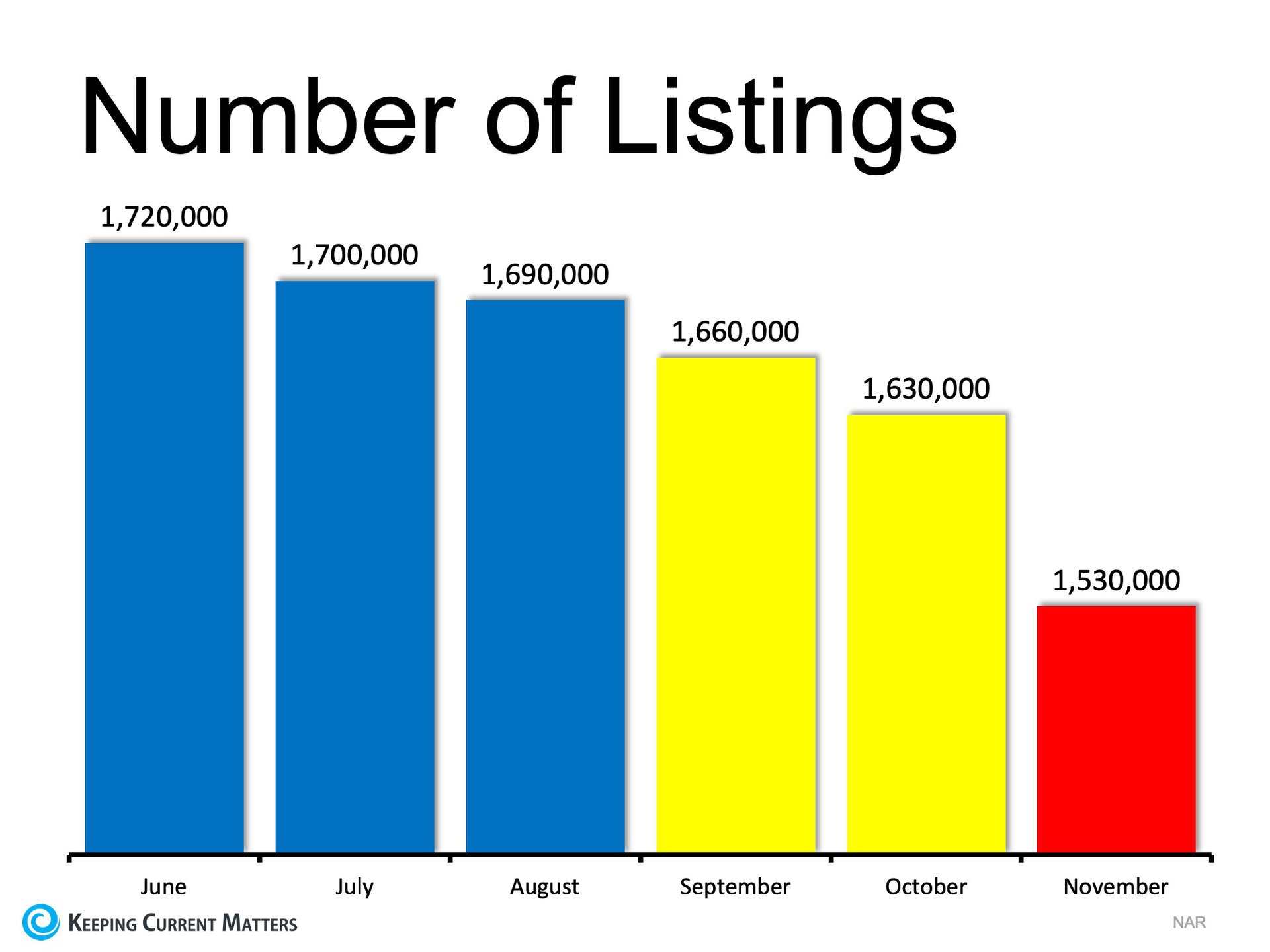
When we look at available inventory numbers released by the National Association of Realtors (NAR), we see that the actual number of homes for sale has decreased in each of the last five months.
The Best Time to List Your House? TODAY! | Keeping Current Matters

What does this mean to you as a seller?

The best time to sell is when there is less competition. That guarantees you a better price and fewer hassles in the transaction.

Bottom Line

If you are thinking of selling your house this year, the best time to put it on the market might be right now. Call me today and let's discuss your options, 661-510-5370

Friday, August 18, 2017

Homeowner's Net Worth Is Still Greater Than a Renter's

Every three years, the Federal Reserve conducts their Survey of Consumer Finances in which they collect data across all economic and social groups. The latest survey, which includes data from 2010-2013, reports that a homeowner’s net worth is 36 times greater than that of a renter ($194,500 vs. $5,400).
The latest survey data, covering 2014-2016 will be released later this year. In the meantime, Lawrence Yun, the National Association of Realtors’ Chief Economist estimates that the gap has widened even further, to 45 times greater ($225,000 vs. $5,000)!

Put Your Housing Cost to Work for You

As we’ve said before, simply put, home ownership is a form of ‘forced savings.’ Every time you pay your mortgage, you are contributing to your net worth. Every time you pay your rent, you are contributing to your landlord’s net worth.
The latest National Housing Pulse Survey from NAR reveals that 84% of consumers believe that purchasing a home is a good financial decision. William E. Brown comments :
“Despite the growing concern over affordable housing, this survey makes it clear that a strong majority still believe in home ownership and aspire to own a home of their own. Building equity, wanting a stable and safe environment, and having the freedom to choose their neighborhood remain the top reasons to own a home. 

Bottom Line

If you are interested in finding out if you could put your housing cost to work for you by purchasing a home, call us today so we can guide you through the process. 661-702-4767

Friday, April 21, 2017

Buying is Now 37.7% Cheaper Than Renting in the US

The results of the latest Rent vs. Buy Report from Trulia show that homeownership remains cheaper than renting with a traditional 30-year fixed rate mortgage in the 100 largest metro areas in the United States.
The updated numbers actually show that the range is an average of 17.4% less expensive in Honolulu (HI), all the way up to 53.2% less expensive in Miami & West Palm Beach (FL), and 37.7% nationwide!

Other interesting findings in the report include:

  • Interest rates have remained low, and even though home prices have appreciated around the country, they haven’t greatly outpaced rental appreciation.
  • Home prices would have to appreciate by a range of over 23% in Honolulu (HI), up to over 45% in Ventura County (CA), to reach the tipping point of renting being less expensive than buying.
  • Nationally, rates would have to reach 9.1%, a 145% increase over today’s average of 3.7%, for renting to be cheaper than buying. Rates haven’t been that high since January of 1995, according to Freddie Mac.

Bottom Line

Buying a home makes sense socially and financially. If you are one of the many renters out there who would like to evaluate your ability to buy this year, don't hesitate to give me a call, 661-702-4767.

Wednesday, November 30, 2016

Why Are Mortgage Interest Rates Increasing?


Why Are Mortgage Interest Rates Increasing? | Keeping Current Matters

According to Freddie Mac's latest Primary Mortgage Market Survey, the 30-year fixed rate mortgage interest rate jumped up to 3.94% last week. Interest rates had been hovering around 3.5% since June, and many are wondering why there has been such a significant increase so quickly.

Why did rates go up?

Whenever there is a presidential election, there is uncertainty in the markets as to who will win. One way that this is noticeable is through the actions of investors. As we get closer to the first Tuesday of November, many investors pull their funds from the more volatile and less predictive stock market and instead, choose to invest in Treasury Bonds. When this happens, the interest rate on Treasury Bonds does not have to be as high to entice investors to buy them, so interest rates go down. Once the elections are over and a President has been elected, investors return to the stock market and other investments, leaving the Treasury to raise rates to make bonds more attractive again. Simply put, the better the economy, the higher interest rates will go. For a more detailed explanation of the many factors that contribute to whether interest rates go up or down, you can follow this link to Investopedia.

The Good News

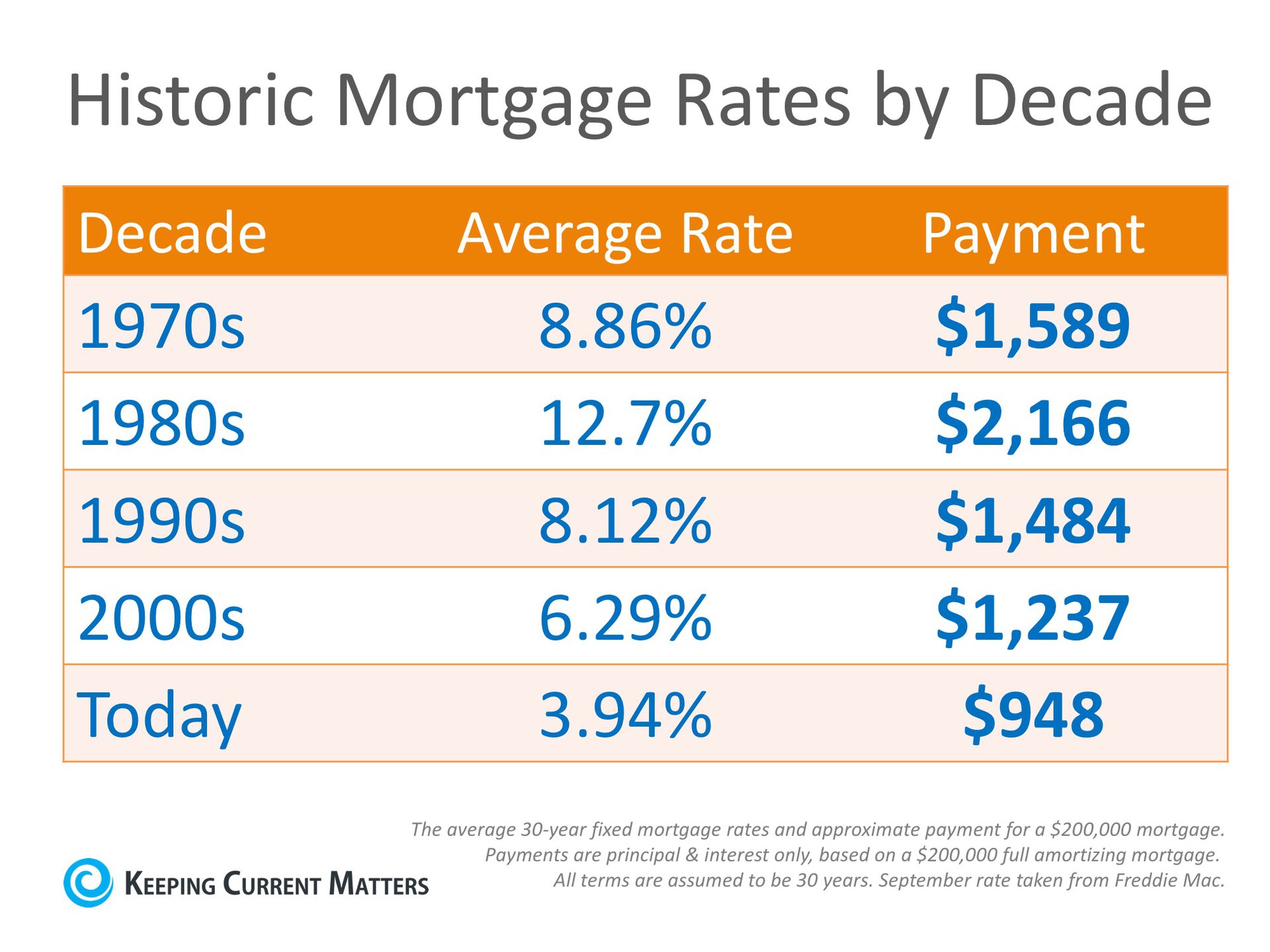
Even though rates are closer to 4% than they have been in nearly 6 months, they are still slightly below where we started 2016, at 3.97%. The great news is that even at 4%, rates are still significantly lower than they have been over the last 4 decades, as you can see in the chart below. Why Are Mortgage Interest Rates Increasing? | Keeping Current Matters 
Any increase in interest rate will impact your monthly housing costs when you secure a mortgage to buy your home. A recent Wall Street Journal article points out that, "While still only roughly half the average over the past 45 years, according to Freddie Mac, the quick rise has lenders worried that home loans could become more expensive far sooner than anticipated." Tom Simons, a Senior Economist at Jefferies LLC, touched on another possible outcome for higher rates:
"First-time buyers look at the monthly total, at what they can afford, so if the mortgage is eaten up by a higher interest expense then there's less left over for price, for the principal. Buyers will be shopping in a lower price bracket; thus demand could shift a bit."

Bottom Line

Interest rates are impacted by many factors, and even though they have increased recently, rates would have to reach 9.1% for renting to be cheaper than buying. Rates haven't been that high since January of 1995, according to Freddie Mac.

Thursday, November 3, 2016

**Top 10 Reasons To List Your House During The Holidays**

 .


Every year I hear from sellers that the holidays are not a good time to sell a home.  The unbelievable part is, it's one of the best times of years to make a move! 

Here are the top 10 reasons to make a move during the holidays:

  1. People who are spending their time looking at property during the holidays are MOTIVATED serious buyers and are more ready to make a move!
  2. Many sellers are going to wait until after the holidays to list their homes which means less competition for your home.
  3. Houses "show better" when tastefully decorated for the holidays with the pretty lights and festive colors associated with the season.
  4. Buyers are more emotional during the holidays and often base their decision on the warmth and good feeling they receive when viewing a home.
  5. Buyers have more time to look for a house during the holidays because many people have time off from work to purchase a home.
  6. Many people want to buy before the end of the year for financial and tax reasons.
  7. January is traditionally the month for job transfers. Transferees can't wait until the spring to buy and these buyers need a home now.
  8. Many home buyers dedicate a larger portion of their house hunting time during the holidays to searching online, but if your home is not on the market it won't be seen.
  9. You can have a daily showing schedule, create blackout dates, and take calls around your holiday events .
  10. Many buyers want to be in a new home for Christmas. Maybe that is your goal? A bigger home, living room, dining room for the family.
Whatever the reason you want to make a move, the holidays are a perfect time to make a move, call me today, 661-702-4767, or visit www.SellingSCVHome.com for a complete market evaluation of your home.  

Wednesday, March 23, 2016

***Do You Have Positive Equity In Your Home?***

91.5% of Homes in the US have Positive Equity | Keeping Current Matters 
CoreLogic’s latest Equity Report revealed that one million borrowers regained equity in their homes in 2015. The outlook for 2016 remains positive as well, as an additional 850,000 properties would regain equity if home prices rose another 5% this year. 

The study also revealed:

  • 95% of homes valued over $200,000 now have a positive equity position
  • 87% of homes valued under $200,000 have entered a positive position
  • The 11.5% growth in home equity in Q4 marked the 13th consecutive quarter of double digit gains
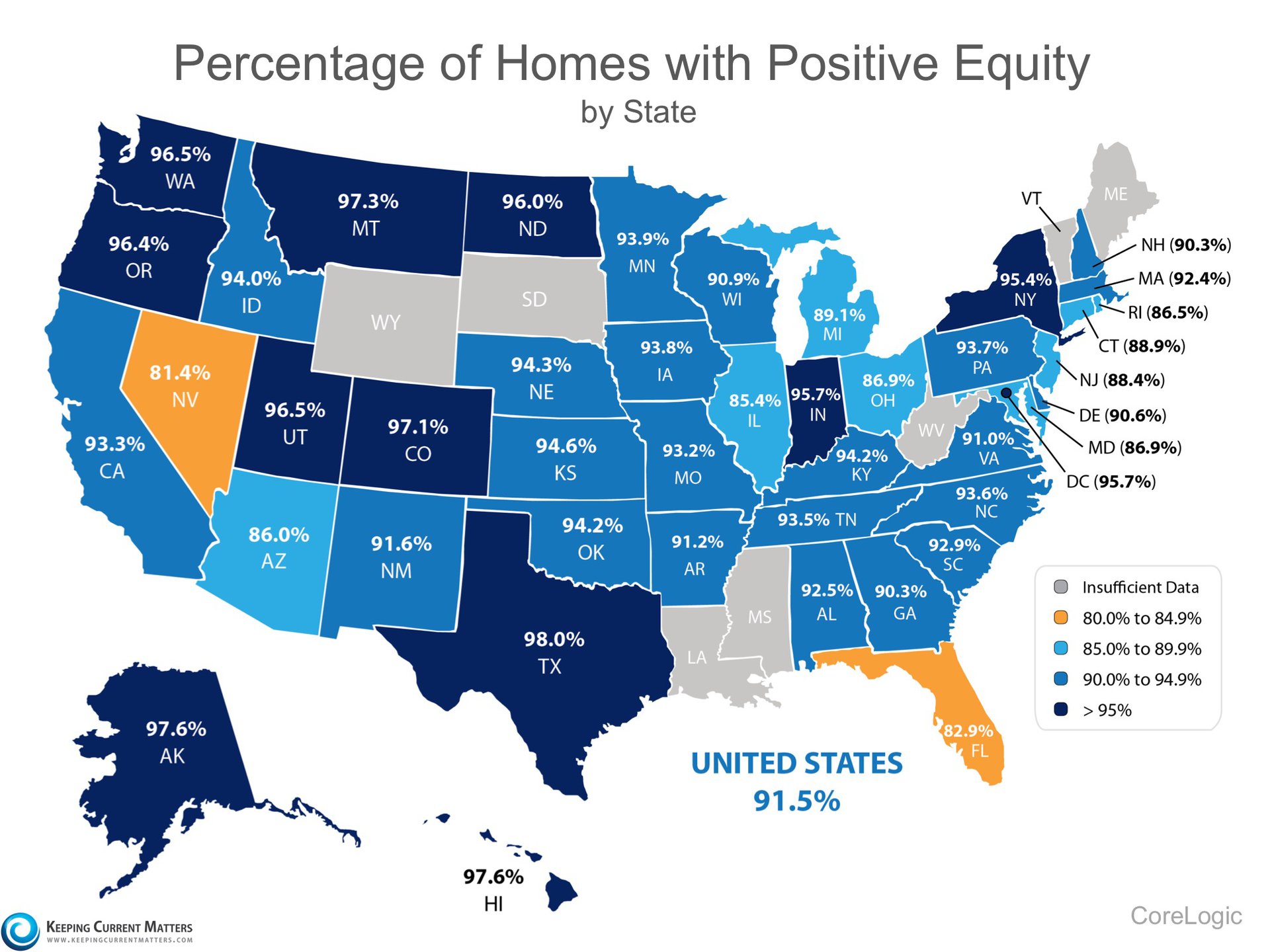
Below is a map showing the percentage of homes with a mortgage, in each state, that have positive equity. (The states in gray have insufficient data to report.) 91.5% of Homes in the US have Positive Equity | Keeping Current Matters

Significant Equity Is On The Rise

Anand Nallathambi, President & CEO of CoreLogic, believes this is great news for the “long-term health of the U.S. economy.” He went on to say:
“The number of homeowners with more than 20% equity is rising rapidly. Higher prices driven largely by tight supply are certainly a big reason for the rise, but continued population growth, household formation and ultralow interest rates are also factors.”
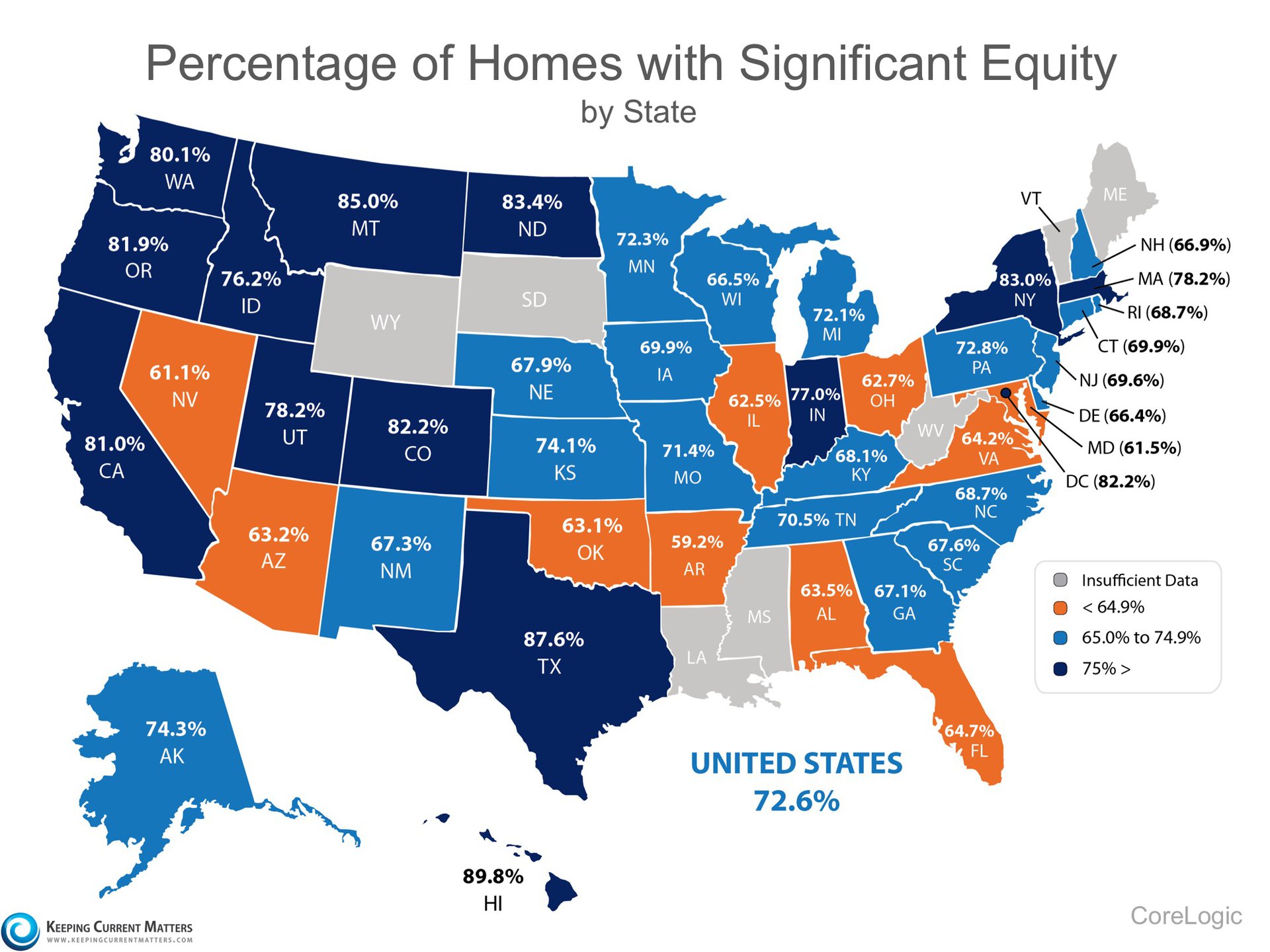
Of the 91.5% of homeowners with positive equity in the US, 72.6% have significant equity (defined as more than 20%). This means that nearly three out of four homeowners with a mortgage could use the equity in their current home to purchase a new home now. The map below shows the percentage of homes with a mortgage, in each state, with significant equity.91.5% of Homes in the US have Positive Equity | Keeping Current Matters

Bottom Line

If you are one of the many homeowners who is unsure of how much equity you have in your home and are curious about your ability to move, click here and receive a copy of a free market evaluation of your home.

Tuesday, February 23, 2016

Buying A Home In Santa Clarita?


 Thinking of Buying A Home? What Are You Waiting For? | Keeping Current Matters


Here comes my prior to Spring blog post.  Same as it has been the past few years! If you haven't purchased a home what in the heck are you waiting for?!?!


With spring right around the corner, you may be wondering if you should wait to enter the housing market. Here are four great reasons to consider buying a home today instead of waiting.
  1. Prices Will Continue to Rise

CoreLogic’s latest Home Price Index reports that home prices have appreciated by 6.3% over the last 12 months. The same report predicts that prices will continue to increase at a rate of 5.4% over the next year. The Home Price Expectation Survey polls a distinguished panel of over 100 economists, investment strategists, and housing market analysts. Their most recent report projects home values to appreciate by more than 3.2% a year for the next 5 years. The bottom in home prices has come and gone. Home values will continue to appreciate for years. Waiting no longer makes sense.
  1. Mortgage Interest Rates Are Projected to Increase

Freddie Mac’s Primary Mortgage Market Survey shows that interest rates for a 30-year mortgage have remained below 4%. Most experts predict that they will begin to rise over the next 12 months. The Mortgage Bankers Association, Freddie Mac & the National Association of Realtors are in unison projecting that rates will be up almost three-quarters of a percentage point by this time next year. An increase in rates will impact YOUR monthly mortgage payment. Your housing expense will be more a year from now if a mortgage is necessary to purchase your next home.
  1. Either Way You Are Paying a Mortgage

As a paper from the Joint Center for Housing Studies at Harvard University explains: “Households must consume housing whether they own or rent. Not even accounting for more favorable tax treatment of owning, homeowners pay debt service to pay down their own principal while households that rent pay down the principal of a landlord plus a rate of return. That’s yet another reason owning often does—as Americans intuit—end up making more financial sense than renting.”
  1. It’s Time to Move On with Your Life

The ‘cost’ of a home is determined by two major components: the price of the home and the current mortgage rate. It appears that both are on the rise. But what if they weren’t? Would you wait? Look at the actual reason you are buying and decide whether it is worth waiting. Whether you want to have a great place for your children to grow up, you want your family to be safer or you just want to have control over renovations, maybe it is time to buy.

If the right thing for you and your family is to purchase a home this year, buying sooner rather than later could lead to substantial savings.

Bottom Line

If you are ready and willing to buy, find out if you are able to. Call me today and get started!

Tuesday, February 9, 2016

Groundhog? No groundhog? Why You Should Sell Before Spring

No Matter Which Groundhog You Listen to, You Should Sell Before Spring! | Keeping Current Matters
 Is spring closer than we think? Depending on which Groundhog you witnessed, you may have less time than you think to get your home on the market before the busy spring season. Many sellers feel that the spring is the best time to place their home on the market as buyer demand traditionally increases at that time of year. However, the next six weeks before spring hits also have their own advantages. Here are five reasons to sell now. 

1. Demand is Strong

Foot traffic refers to the number of people out actually physically looking at homes right now. The latest foot traffic numbers show that buyers are still out in force looking for their dream home. These buyers are ready, willing and able to buy…and are in the market right now! Take advantage of the strong buyer activity currently in the market. 

2. There Is Less Competition Now

Housing supply just dropped to 1.5 months in the Santa Clarita Valley and surrounding areas, which is well under the 6 months’ supply that is needed for a normal housing market. This means, in many areas, there are not enough homes for sale to satisfy the number of buyers in that market. This is good news for home prices. However, additional inventory is about to come to market. There is a pent-up desire for many homeowners to move, as they were unable to sell over the last few years because of a negative equity situation. Homeowners are now seeing a return to positive equity as real estate values have increased over the last three years. Many of these homes will be coming to the market in the near future. Also, new construction of single-family homes is again beginning to increase. A study by Harris Poll revealed that 41% of buyers would prefer to buy a new home while only 21% prefer an existing home (38% had no preference). The choices buyers have will increase in the spring. Don’t wait until all this other inventory of homes comes to market before you sell.

3. The Process Will Be Quicker

One of the biggest challenges of the housing market has been the length of time it takes from contract to closing. Banks are requiring more and more paperwork before approving a mortgage. There is less overall business done in the winter. Therefore, the process will be less onerous than it will be in the spring. Getting your house sold and closed before the spring delays begin will lend itself to a smoother transaction.

4. There Will Never Be a Better Time to Move-Up

If you are moving up to a larger, more expensive home, consider doing it now. Prices are projected to appreciate by 5.3% over the next 12 months according to CoreLogic. If you are moving to a higher priced home, it will wind-up costing you more in raw dollars (both in down payment and mortgage payment) if you wait. You can also lock-in your 30-year housing expense with an interest rate below 4% right now. Rates are projected to rise by three-quarters of a percent by the end of 2016.

5. It’s Time to Move On with Your Life

Look at the reason you decided to sell in the first place and determine whether it is worth waiting. Is money more important than being with family? Is money more important than your health? Is money more important than having the freedom to go on with your life the way you think you should? Only you know the answers to the questions above. You have the power to take back control of the situation by putting your home on the market. Perhaps, the time has come for you and your family to move on and start living the life you desire.

That is what is truly important.

Tuesday, January 12, 2016

*When Is A Good Time To Rent??? NOT NOW!*

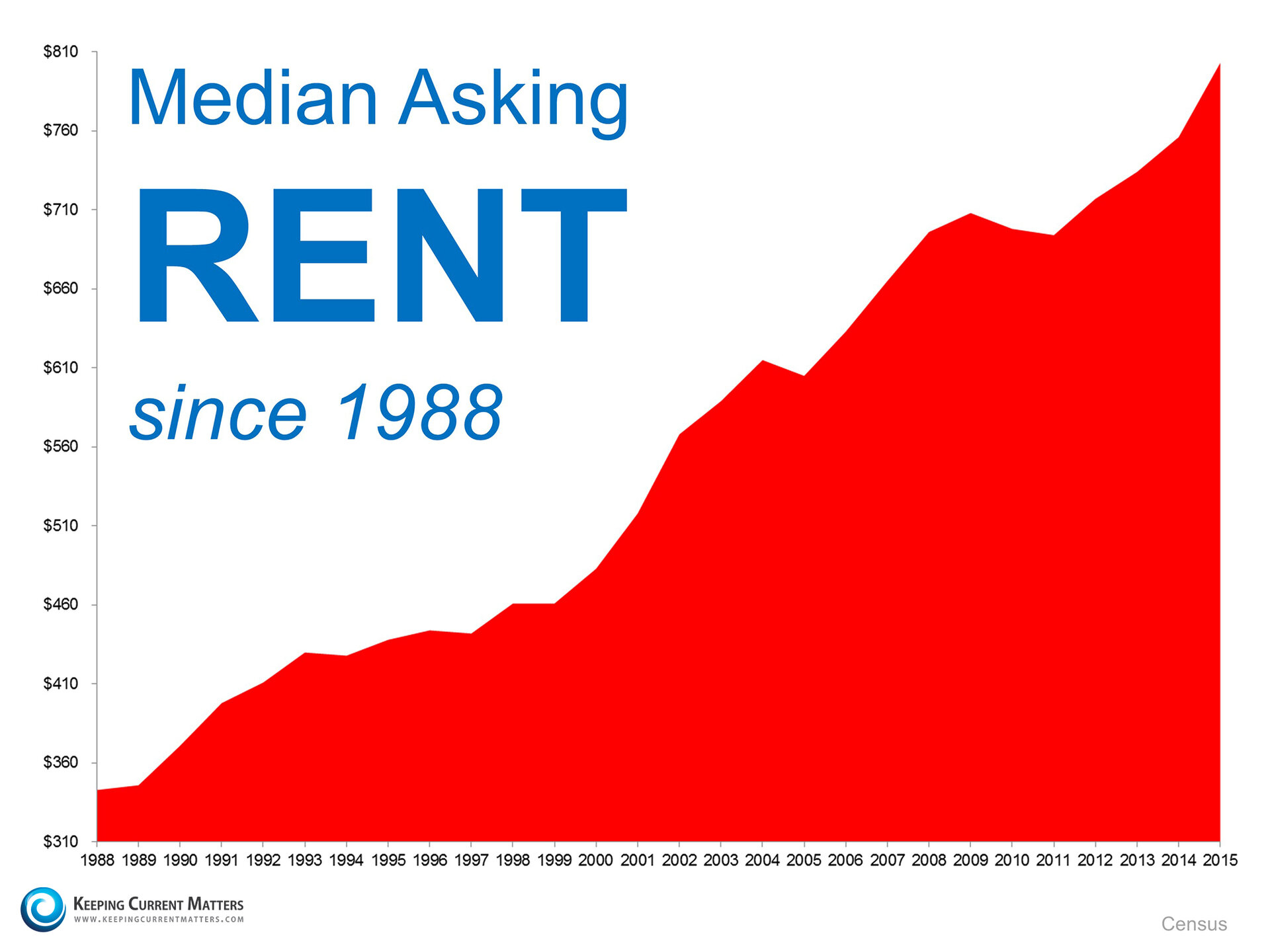
Median Asking Rents | Keeping Current MattersPeople often ask whether or not now is a good time to buy a home. No one ever asks when a good time to rent is. However, I want to make certain that everyone understands that today is NOT a good time to rent. The Census Bureau recently released their third quarter median rent numbers. Here is a graph showing rent increases from 1988 until today: A recent Wall Street Journal article reports that rents rose “faster last year than at any time since 2007, a boon for landlords but one that has stoked concerns about housing affordability for renters.”  The article also cited results from a recent Reis Inc report which revealed that average effective rents rose 4.6% in 2015, the biggest gain since before the recession. Over the past 15 years, rents have risen at a rate of 2.7% annually.

Where are rents headed?

Jonathan Smoke, Chief Economist at realtor.com recently warned that:
“Low rental vacancies and a lack of new rental construction are pushing up rents, and we expect that they’ll outpace home price appreciation in the year ahead.” 

Bottom Line

According to the WSJ article:
“In general, the higher rents go, the more difficult it will be for young people to save for down payments, making them likely to rent even longer.”
One way to protect yourself from rising rents is to lock in your housing expense by buying a home. If you are ready and willing to buy, don't hesitate to give me a call for a free confidential meeting.

Wednesday, November 25, 2015

Real Estate Agent In Valencia, Ca

Real Estate Agent In Valencia, CA

If you are looking for a real estate agent in any area of Santa Clarita, don't hesitate to contact me at anytime.  I have been in real estate since 1996 and have closed over 1,500 successful transactions.  I have grown up, went to school, worked, and lived in Santa Clarita since 1982.

From home buyers to home sellers I am ready to service your needs to the highest possible level.  From buying or selling a home from $50,000 to $50,000,000, I know that all of my clients needs are different and I will do everything I can to service those needs.

Real estate can be a confusing and stressful process for many people, I am here to help with the processes and make sure we have the smoothest transaction possible all put in basic terms.

My clients not only are my clients, but become my friends, to remain your Realtor for life!

Wednesday, August 5, 2015

3% Down Payment Plan Raising Concerns?

This Is NOT Your Parents' 3% Down Payment Plan | Keeping Current MattersIn their latest Housing Market Insight & Outlook report, Freddie Mac revealed that recent low down payment initiatives have raised concerns that we may be returning to the same lax mortgage qualifications that caused the housing crisis from which we are just now recovering. The report went on to explain that today’s underwriting guidelines are nothing like those that existed just prior to the housing meltdown.
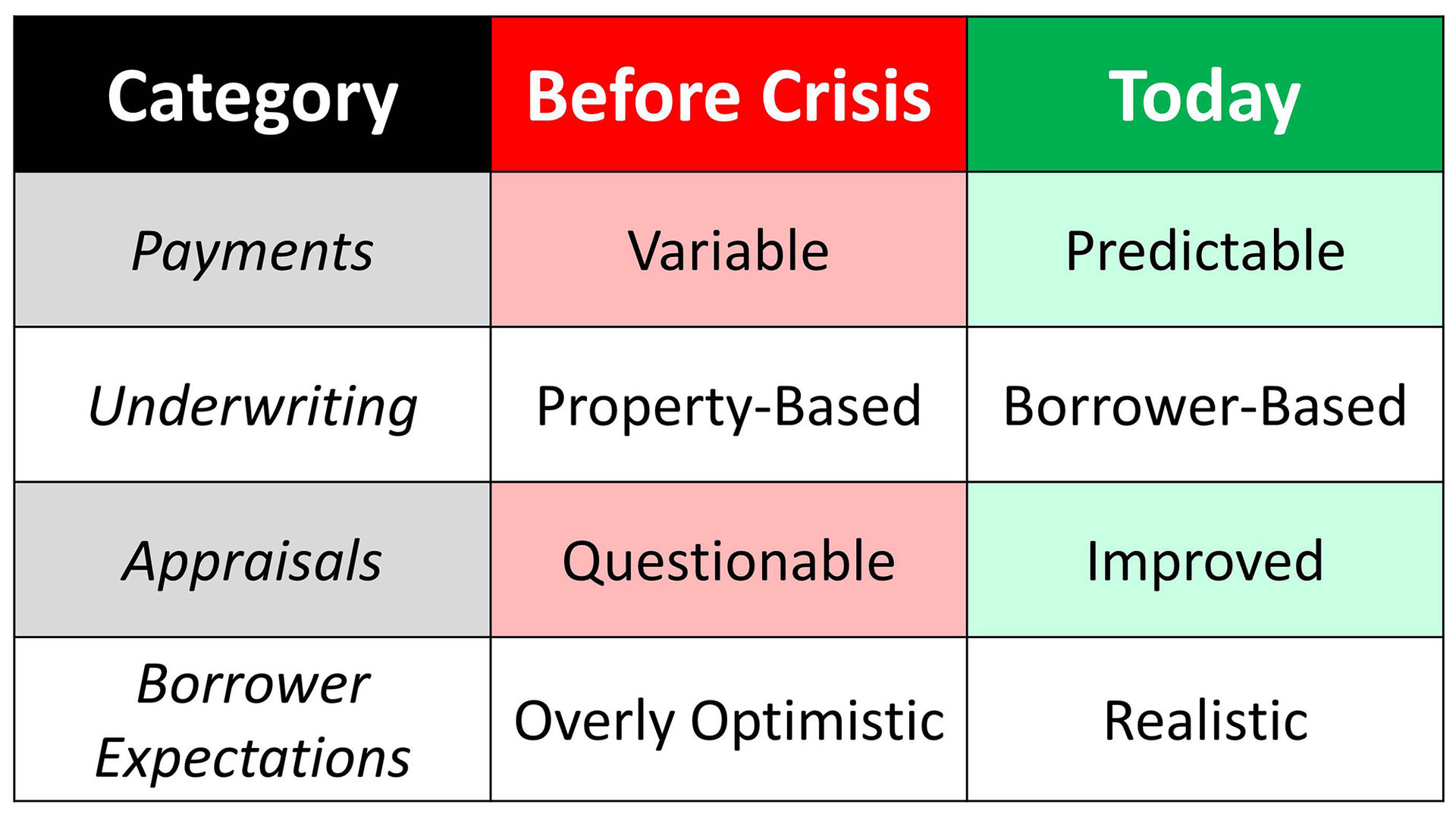
“Pre-crisis underwriting allowed layered risk, that is, the combination of multiple features that amplified credit risk. Low down payments often were combined with variable-payment loan structures, property-based underwriting, and questionable appraisals. These risk factors, along with the ‘irrational exuberance’ of some borrowers, led to large losses during the crisis.”

What is layered risk?

In the pre-crisis environment, many mortgage loans incorporated several additional features besides low down payments that multiplied the total risk of the loans such as: variable payment options, underwriting based on the property not the borrower, questionable appraisal processes. Borrower expectations were also overly optimistic at that time. Freddie Mac highlights the difference between then and now by using a table in the report:3 Percent Down Then vs. Now | Keeping Current Matters
By removing the “layered risk”, we can be confident that low down payment programs will not impact the market the way mortgage underwriting impacted the market a decade ago. And the report explains:
“Previous research has found that reduced down payments can increase the relative probability of homeownership among some groups by over 25 percent.”

Bottom Line

We believe the report’s conclusion says it all:
“As long as the underwriting process bars the return of the layered risks prevalent in the pre-crisis era, lower down payments are not a cause for concern.”

Real Estate Agent In Saugus, CA

If you are looking for a real estate agent in any area of Santa Clarita, don't hesitate to contact me at anytime.  I have been in real estate since 1996 and have closed over 1,000 successful transactions.  I have grown up, went to school, worked and lived in Santa Clarita since 1982.

From home buyers to home sellers I am ready to service your needs to the highest possible level.  From buying or selling a home from $50,000 to $2,000,000, I know that all of my clients needs are different and I will do everything I can to service those needs.

Real estate can be a confusing and stressful process for many people, I am here to help with the processes and make sure we have the smoothest transaction possible all put in basic terms.

My clients not only are my clients, but become my friends, to remain your Realtor for life!

Real Estate In Santa Clarita

So I took a small break from blogging the past few months as number one the market was busy and the time wasn't there for writing everyday.

But the constant question is, "How is the real estate market?"

My answer is always, as a buyer or as a seller?

Right now, if you are buying a home in Santa Clarita, there are 731 active listings! That is up about 10%. Only 305 of those listings are priced under $500,000.  As a buyer, interest rates are still low which will keep your payments lower!

As a seller, prices are up, up, up! This is great if your home ever experienced a decrease in value or if you owed more money than what it is worth that may not be true anymore! If you would like to know the value of your home, please CLICK HERE

Either way, we still have a great real estate market in the SCV! For more information on buying or selling your home please don't hesitate to contact me directly, 661-702-4767

Thursday, May 28, 2015

Foreclosures, Short Sales Not Dead!


"FORECLOSURE ACTIVITY INCREASES 3 PERCENT IN APRIL TO 18-MONTH HIGH DRIVEN BY RISING BANK REPOSSESSIONS!"


A recent report released by RealtyTrac, the nations leading source for comprehensive housing data,  shows foreclosure filing are up 3 for the previous month and up 9% from a year ago! CLICK HERE TO READ REPORT!

Don't freak out! There are a lot of other indicators involved.

I personally believe this has to do with the auction schedule that was occurring the previous 24 months and banks putting holds on many properties and now following through with the foreclosure process.  As well, many homeowners loans were adjusting the past 24 months, home owners couldn't get used to the adjustment and allowed their homes to get to the foreclosure point.

The interesting thing is a total of 51,773 US properties started the foreclosure process for the first time in April 2015, which is down 3 percent from the previous month and down 5 percent from a year ago.  There are many statistics you can read in the report above.

Nonetheless, short sales and foreclosures are not dead! Banks are still working with people whose loans are adjusting and are just to much to meet the demand of the household finances.  The great thing is consumers have choices now! IF you have equity in your home and have a decent credit score, I can help you get your home refinanced into a better more affordable loan.  If the issue is no equity and loan adjusting to a payment that is too much for the household, banks will still work with you on a short sale and save your credit from a foreclosure.  

Call me today and let's figure it out whatever your situation! 661-702-4767

Tuesday, May 26, 2015

Santa Clarita New Construction!

New Construction: Hear Those Hammers in the Background? | Keeping Current MattersIf you are planning on selling your home over the next two years, now may be the time to act. Demand is high, supply is low and many homeowners are benefiting from an almost auction atmosphere with several buyers fighting for their house in the current multi-bid environment. Higher prices and less stringent contingencies are making it easier for the seller and their family. However, there may be more (and better) competition about to hit the market in the form of newly constructed homes. This may put an end to the buyers’ frenzy over the limited inventory of existing homes which has been below normal levels for over a year. According to the latest report from the National Association of Realtors(NAR), the forecast for new housing starts and sales will increase significantly over the next two years:
  • NAR is forecasting 1.1 million new housing starts in 2015, jumping to 1.4 million in 2016.
  • New home sales are projected to increase from the 437,000 in 2014 to 570,000 this year and 720,000 in 2016.

Bottom Line

In major urban areas across the country, building cranes are again stretched across the city skyline. In many suburbs, you can again hear the thumping of a carpenter’s hammer in the background. Those are the sights and sounds that inform us that it may be time to sell. 

If you are considering a move to new construction check out my website for connection to all of the new construction builds in Santa Clarita CLICK HERE

More Consumers Putting Less Money Down To Buy Homes!

recent post by the National Association of Realtors (NAR) revealed that in the months of December 2014 through February 2015, there was an increase in the number of first-time buyers making a down payment of 6% or less as compared to last year:
    More Home Buyers Putting Less Down | Keeping Current Matters
  • 2014: 61% of first time home buyers
  • 2015: 66% of first time home buyers
While the number of small down payments is lower than it was in 2009 when 77% of down payments were 6% or less, it does show the recent decisions by both Fannie Mae and Freddie Mac to offer 3% down payment options to certain buyers is impacting the market. FHFA Director Mel Watt recently explained why Freddie and Fannie made this decision:
“The new lending guidelines by Fannie Mae and Freddie Mac will enable creditworthy borrowers who can afford a mortgage, but lack the resources to pay a substantial down payment plus closing costs, to get a mortgage with 3% down. These underwriting guidelines provide a responsible approach to improving access to credit while ensuring safe and sound lending practices.”
This is great news to millions of purchasers that have been denied the opportunity to own their own home because of the almost impossible burden of saving for a 20% down payment.

Will these programs create future challenges?

Certain pundits fear that low down payment programs will create a wave of foreclosures down the road. Mr. Watt also addressed this concern:
“To mitigate risk, Fannie Mae and Freddie Mac will use their automated underwriting systems, which include compensating factors to evaluate a borrower’s creditworthiness. In addition, the new offerings will also include home ownership counseling, which improves borrower performance. FHFA will monitor the ongoing performance of these loans.”
Also, the Urban Institute revealed data showing what impact substantially lower down payments would have on default rates in today’s mortgage environment. Their study revealed:
“Those who have criticized low-down payment lending as excessively risky should know that if the past is a guide, only a narrow group of borrowers will receive these loans, and the overall impact on default rates is likely to be negligible. This low down payment lending was never more than 3.5 percent of the Fannie Mae book of business, and in recent years, had been even less. If executed carefully, this constitutes a small step forward in opening the credit box—one that safely, but only incrementally, expands the pool of who can qualify for a mortgage.”

Here are the direct links to the guidelines for each program:


Fannie Mae 3% Down Program Freddie Mac 3% Down Program Remember, as with any new program, there will be some confusion. 
If you are considering purchasing a home, please don't hesitate to contact me directly, I will put you in touch with a lender to find the best loan option, with the least amount of down payment you are looking for, 661-702-4767. This market isn't going to last forever!

. 

Lagging Supply of Homes...Cause of Real Estate Slowdown?

The National Association of Realtors (NAR) recently released the results of their Existing Home Sales Report. Despite the fact that properties are selling faster than they have at any other time since July of 2013, existing home sales declined 3.3% from March. NAR’s Chief Economist Lawrence Yun explained the main reason for the slow:
"April's setback is the result of lagging supply relative to demand and the upward pressure it's putting on prices.”
One major news organization actually used this headline about the decline:

Existing home sales crater in April, falling 3.3%

Well, they certainly haven’t cratered! April marked the second month in a row that the annual sales pace remained above the five million mark (5.04 million) throughout the US. Year-over-year sales have increased for seven consecutive months and are still 6.1% above a year ago. Every month, SentriLock, LLC provides NAR Research with data on the number of homes shown to potential buyers. This data is referred to as ‘Foot Traffic’ and is a great predictor of future sales and buyer demand. In April, buyer demand remained at the same level experienced in March.

So why did sales go down?

Buyers who are ready and willing to make a purchase are entering a market where their dream house may not have been listed yet. They can’t find it! Or if they find it, it happens to catch the eye of other buyers and an auction like environment’ begins.

Housing inventory declined from last year and supply in our market is VERY tight. This is causing bidding wars, faster pace price growth and properties selling at a quicker pace.  It is also causing sellers to overprice their homes and some homes sitting without showings.  


Bottom Line

So how do you make sense of everything that’s going on in the housing market when there are so many conflicting headlines on the same report? John Burns, real estate expert and CEO of John Burns Real Estate Consulting gives this advice:
“The bottom line is this: don't make decisions based on newspaper articles. Read the actual press release, including the methodology, and make sure the results jive with other data points and qualitative feedback you receive.”
If you are one of the many homeowners out there realizing that now may be the time to list your home for sale, or one of the many renters debating a purchase, sitting with a local real estate professional who takes the time to find out what’s really going on in the market, should be your first step! Don't hesitate to contact me today for a free confidential consultation.

Tuesday, May 19, 2015

Where Are Home Prices Headed?

Today, many real estate conversations center on housing prices and where they may be headed. That is why we like the Home Price Expectation Survey. Every quarter, Pulsenomics surveys a nationwide Where Are Prices Headed in the Next 5 Years? | Keeping Current Matterspanel of over one hundred economists, real estate experts and investment & market strategists about where prices are headed over the next five years. They then average the projections of all 100+ experts into a single number. 

The results of their latest survey

  • Home values will appreciate by 4.3% in 2015.
  • The cumulative appreciation will be 19.4% by 2019.
  • That means the average annual appreciation will be 3.6% over the next 5 years.
  • Even the experts making up the most bearish quartile of the survey still are projecting a cumulative appreciation of 11.8% by 2019.
Individual opinions make headlines. 

Tuesday, April 21, 2015

I Need Your Listing!

Though the real estate market has improved, we still have one item holding it back from a full recovery – a robust supply of homes for sale. Demand has increased dramatically. At the same time, housing inventory is decreasing especially at the lower price points. The National Association of Realtors (NAR) recently revealed that there is a pent-up seller demand caused by the uncertainty created by the housing crisis of the last decade.

What does that mean to you?

Houses listed today sell quickly. With prices still below peak values of 2007 in many parts of the country and mortgage interest rates at historic lows, this may be the perfect time for your family to make the move to the dream house you always wanted – whether that’s a larger home or that vacation/retirement home you have been looking at.

What does that mean to the economy?

Housing has always been an essential part of the U.S. economy. As I have reported before, real estate not only provides housing for families. It is often the greatest source of wealth and savings for many. The recent increase in real estate sales has led to an increase in real estate prices. This has increased the value of everyone’s' home, whether they are selling or not. This leads to an increase in consumer confidence which in turn leads to an increase in consumer spending. Plus, each home sale automatically puts money into the economy. NAR compiled data from research conducted by the Bureau of Economic Analysis & Macroeconomic Advisers on the economic impact of a home purchase. After reviewing the data, they concluded that the total economic impact of a typical home sale in the United States is an astonishing $52,205. The more homes that sell, the better the economy.

Bottom Line

In order for the U.S. economy to get better, we need to sell more homes. Perhaps, it makes sense for one of those homes to be yours. If you have considered selling but are still a little nervous, now might be the time to sit down with and discuss the sale of your home! OR visit www.SellingSCVHome.com for your homes value!

Monday, April 20, 2015

Pets Need Help Adjusting Too!!

Moving can be stressful for every family member – including the four-legged ones. The tough part is you can't explain to your dogs and cats what's happening. Every animal reacts differently to new living quarters, and temperament has a lot to do with it. Some pets take a move in stride, while others exhibit anxiety or insecurity for days or weeks.
Here are some things to consider as the big move approaches and after you're in your new home:
1. A little help from the vet
Ask your veterinarian for recommendations on easing the transition. If your pet is generally anxious or high-strung, perhaps it's worth asking whether a mild calming medication might be right for your pet for the first few days after the move. It's not uncommon for vets to prescribe gentle stress relief for travel. Your veterinarian may also suggest additional vaccinations depending on the area and climate you're moving to.
2. A pre-move home tour
If possible, take your pet to the new home for a visit before the official moving day. That way, it will be familiar with the house, yard and even new smells when you actually move in.
3. Time to explore
After you move in, give your pet time to explore the house gradually, rather than letting it loose immediately to roam at will. Limit it to one area – perhaps the kitchen – for a few hours until it calms down. Show the pet where you've placed its familiar items like the food dish, water bowl and bed. You might want to keep a dog on a leash when first allowing it to tour the greater part of the house. If you have a fenced yard, avoid letting pets out unsupervised for several days until you're sure they can't climb or dig out from under the fence.
4. The benefit of pet walks
Take your dog for walks and good sniffing around the entire neighborhood. While you acclimate to your new location primarily by visual cues, dogs depend on their olfactory sense. Leave and enter the new home by different doors during the early walks, so your dog develops a good sense of direction and knows exactly where home is.
5. How cats handle moves
Territorial by nature, cats often experience more issues with moving than their canine counterparts. Keep your cat safe in its carrier upon arrival, placing it in a quiet area. When the hubbub dies down, let it out in an enclosed room away from main traffic areas. Provide your cat with familiar objects, such as a bed, litter box and toys. Spend lots of time with it and encourage it to explore the room, perhaps by strategically placing cat treats. Outgoing, friendly cats might be ready for further exploration within a day or two after arrival, while shy cats might take much longer.
6. Additional supervision
While you have a million things to do after moving into a new house, try to have at least one family member home at all times during the first week or so. Have meals at home and establish a routine for your furry friends as soon as possible. Feed pets and take the dog for walks at the same time as you did at your old home.
7. Update pet IDs
Because accidents happen, update your pet's identification information before you move. Your new municipality might require licensing within a certain time frame, but you need updated tags from day one of your move. If your pets are microchipped, contact the registration company and give them the new information. This way, if Fluffy or Fido slip out the door, anyone who finds them can easily return them to their new home.